
If you're deciding between Google Shopping and Performance Max in 2026, the real question is not which campaign drives more revenue. It's which of the two protects your profit. In this guide, we'll break down how Standard Shopping and Performance Max impact contribution margin, and when each structure makes sense financially.
In late 2024, Google made a major change to how Performance Max and Standard Google Shopping interact. For years, Performance Max took priority, so if both campaign types targeted the same products, Performance Max would often serve first.
However, that has since changed.
Now, when Standard Shopping and Performance Max overlap, what determines which campaign enters the auction is Ad Rank. To put it simply, whichever setup has the stronger bid and predicted performance wins.
For Pay-Per-Click (PPC) specialists, this felt like control was finally returning. But on the other end, for ecommerce operators, the more important aspect is not about auction mechanics. It's about profit.
Because the real issue is never which campaign serves over the other, it's which campaign protects contribution margin.
Current Debates vs the Real Issue
If you've read most industry coverage on this update, you'd find that the conversations mostly revolve around CPC increases, impression share shifts, and feed only strategies.
While all of those factors do matter, none of it answers the most important questions every founder should care about:
"Are we making money after ads?"
Both Performance Max and Standard Shopping optimize for conversion value by default, however, it's important to remember that means revenue, it does not mean margin.
As we explained in our detailed guide on how to optimize Google Shopping without killing your profit margins, Google sees conversion value, predicted conversion rate, and your target ROAS. But it does not see cost of goods sold (COGS), shipping costs, refund rates, discount depth, or operational overhead.
If you haven't read that breakdown yet, its foundational to understanding why revenue and profitability diverge.
 Georgia Carapetis
If two products both generate $100 in revenue, Google treats them as equally valuable. It doesn't matter if one produces $70 in gross margin, and the other produces $15.
From the perspective of the platform, they are the same.
...but from your business perspective, they're not even close.
Standard Shopping: Where Profit Control is Stronger
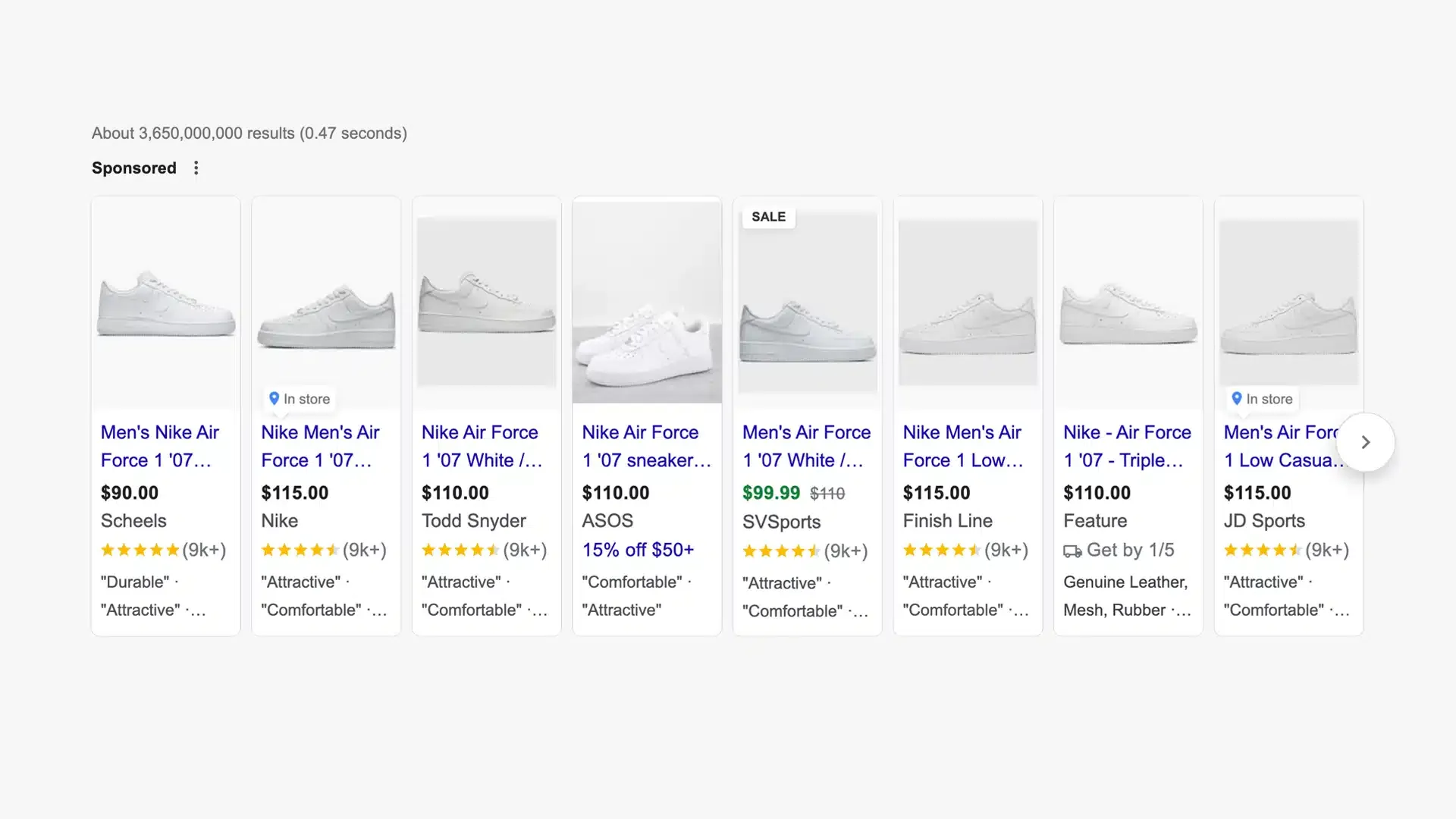
Standard Shopping campaigns are fundamentally feed-driven and bid-controlled. You can:
- Decide how products are grouped
- Decide how aggressively to bid
- Separate branded traffic from non-branded traffic
- Segment products by price band, performance tier, or margin category
This structural flexibility is not just a technical feature, it is a crucial financial tool.
If you know that certain SKUs carry significantly higher contribution margin, Standard Shopping allows you to deliberately allocate more budget toward them, suppress low margin products, and exclude items that only make sense for organic traffic.
In this use-case, you're not hoping that Google optimizes in your favour. You're defining the rules under which it operates.
This matters most in catalogues where margin variance is high, for instance:
- Apparel brands with heavy discounting
- Supplement brands with hero products and low margin entry products
- Home goods brands with wide pricing bands
In those scenarios, Standard Shopping allows you to build a margin aware structure, even if Google itself isn't margin aware.
Performance Max: Powerful but Opaque

Performance Max is designed to remove complexity. Instead of manually managing separate Search, Shopping, Display, and YouTube campaigns, you provide assets, audience signals, and a product feed. Google will then allocate budget dynamically across its entire ecosystem.
The promise with Performance Max is simple:
More automation, more reach, more conversions.
And in many cases, it works.
Performance Max can unlock incremental demand across YouTube, Discover, and Display that Standard Shopping alone can't reach. It can blend remarketing and prospecting seamlessly, it can respond auction signals faster than manual structures.
But automation optimizes for what it can measure, conversion value, not margin.
This creates a subtle but important dynamic. Performance Max often gravitates toward what is easiest to convert, that can mean:
- branded search traffic
- heavily discounted best-sellers
- products that drive strong top line revenue but thin contribution margin.
Revenue increases, ROAS appears stable or even improves.
Meanwhile... profit per order declines.
Because the reporting is blended across channels and asset groups, diagnosing this becomes more complex. You see the result. You don't always see the path.
Automation makes growth easier, but it doesn't automatically make growth healthier.
The Ad Rank Update: Fairer Auctions, Same Blind Spot
The 2024 Performance Max update was framed as giving advertisers more flexibility. Now, if Standard Shopping and Performance Max target the same products, they will compete based on Ad Rank.
In theory, this levelled the playing field, but in practice, it can introduce new financial pressure.
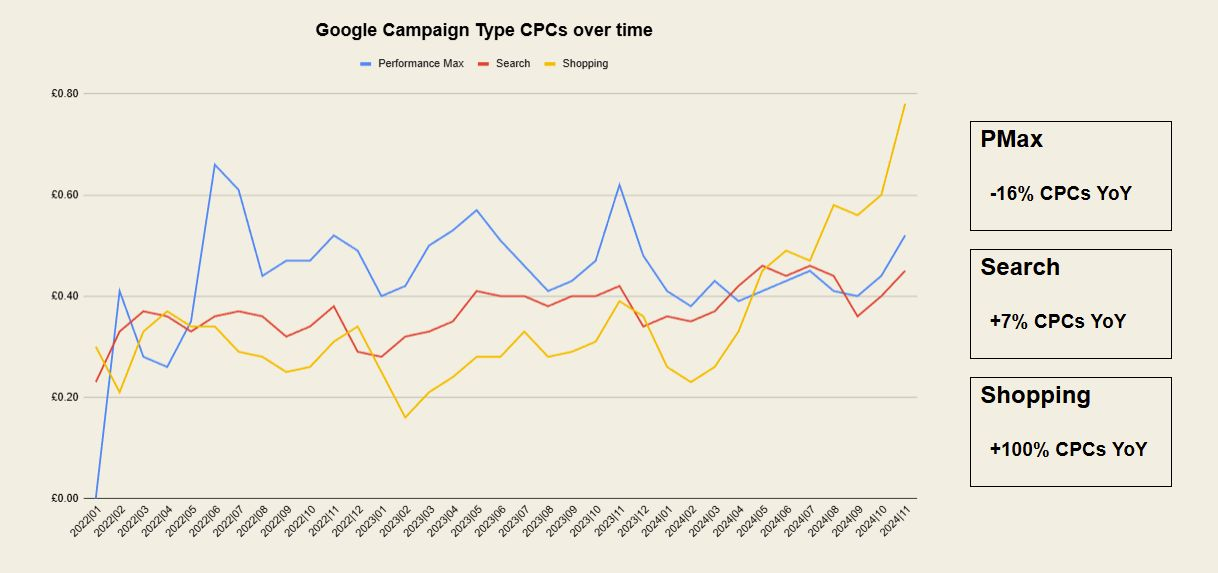
If advertisers increase bids within Standard Google Shopping to regain impression share, Cost Per Clicks (CPCs) rise. Rising CPCs are manageable when you have strong margins, but it becomes risky when margins are tight.
You may win more auctions, see stable or even slightly improved revenue. But if CPC increases faster than conversion value growth, contribution margin shrinks.
This erosion can remain unnoticed, because most dashboards have a main focus on revenue and ROAS.
In the 2024 update, the auction became fairer. However, what it did not become, is profit-aware.
When Standard Shopping is Strategically Stronger
When certain conditions exist, Standard Shopping protects profit more effectively.
First, when margin variation across SKUs is significant; if your highest margin products differ significantly from your lowest margin ones, structural segmentation matters.
Second, when discounting is frequent; If promotions fluctuate, controlling which products receive budget allocation becomes critical.
Third, when branded search traffic needs separation; Performance Max often blends branded and non-branded demand. In this case, Standard Shopping allows clearer isolation.
In these environments, Standard Shopping is not about nostalgia for manual control, it's about financial precision.
When Performance Max Provides a Competitive Advantage
Performance Max truly shines when your objective is growth, and margins are relatively stable across the catalogue.
If most products operate within similar contribution bands, the risk of margin distortion decreases. Automation can then focus on scaling demand instead of redistributing spend inefficiently.
Performance Max also becomes powerful when creative assets are strong, and audience structure is mature. In these scenarios, it can capture incremental conversions that may be missed by Standard Shopping.
The key here is not avoiding Performance Max, instead, it's understanding what exactly it optimizes for. And ensuring you're measuring what it can't see.
The Experiment Most Brands Should Be Running
Google encourages advertisers to run Performance Max vs Standard Shopping experiments.
While that is useful for measuring revenue impact, the more important experiment is financial.
Instead of comparing only revenue and ROAS:
- compare contribution margin after ad spend
- calculate product level cost of goods (COGS)
- overlay shipping and refund impact
- measure profit per SKU by campaign type.
You may find that Performance Max generates higher revenue but lower profit per dollar spent... or that Standard Shopping generates fewer conversions but stronger net contribution.
Without this layer, you are just optimizing optics, not true outcomes.
The Real Question: Which Campaign Type is More Profitable?
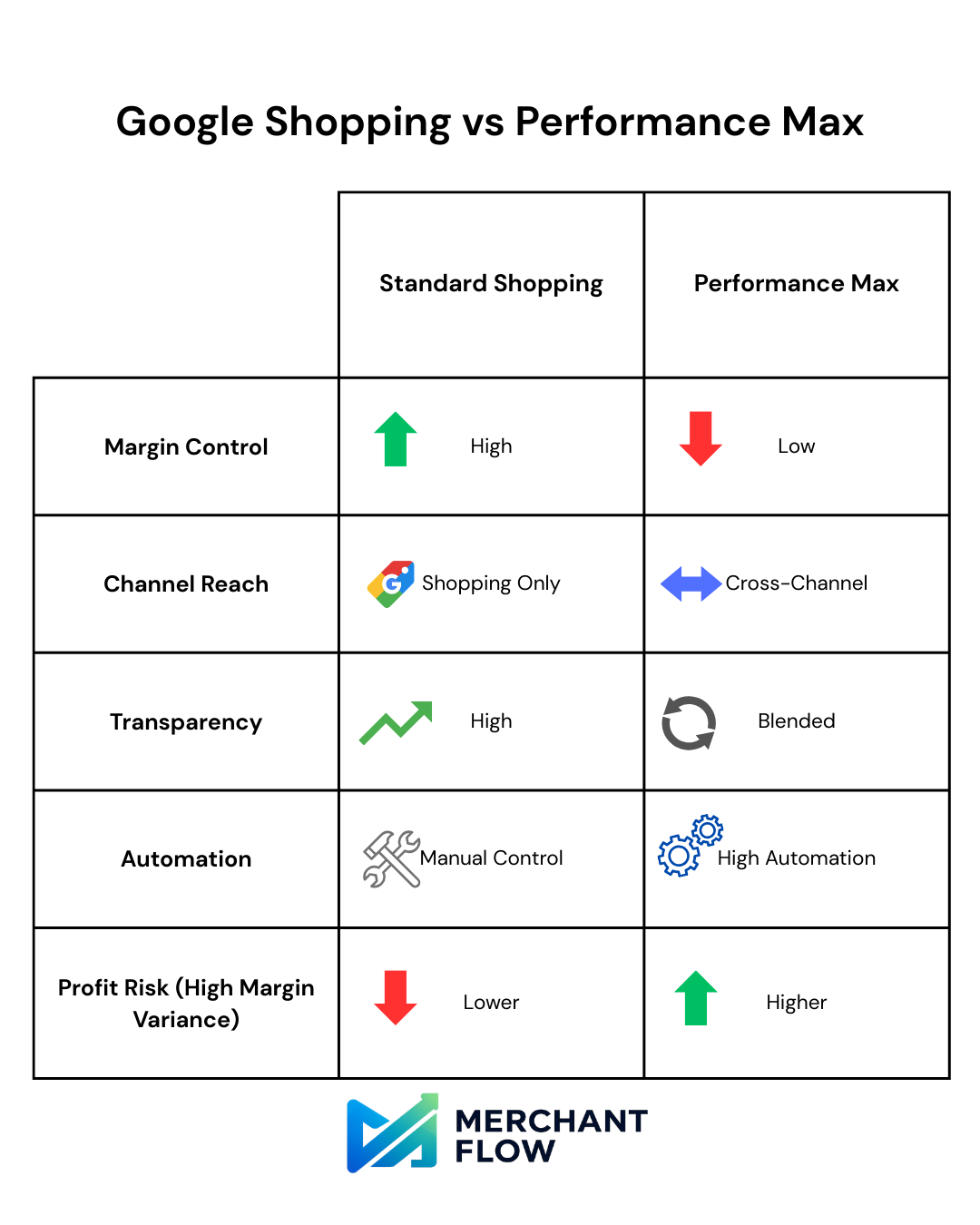
The honest answer is neither by default.
Profitability depends less on campaign type, and more on how your margin structure interacts with automation.
If your catalogue has consistent margins across SKUs, Performance Max can scale profitability because revenue growth is more likely to turn into margin growth. In this scenario, automation works for your economics, not against them.
But on the other hand, if your catalogue has wide variations with margins, the dynamic changes.
Performance Max naturally allocates budget towards products that convert most efficiently, or generate the strongest revenue signals. However, that doesn't always mean the highest margin products. Over time, spend can concentrate around revenue efficiency, instead of margin efficiency.
Contrastingly, Standard Shopping allows you to intervene. You can deliberately push high margin SKUs, control exposure on thin margin products, and structure campaigns around profitability tiers rather than pure revenue output.
So, the real difference in profitability isn't about automation vs manual control. Instead, it's about alignment.
If your campaign structure aligns ad spend along with your strongest contribution margins, profit scales.
If it doesn't, revenue may increase while margins start to subtly compress. And that is the difference that most dashboards fail to reveal.
Final Takeaways
The 2024 Ad Rank update made the auction fairer between Performance Max and Standard Shopping.
However, what it didn't do is make either campaign profit-aware.
So, the answer to "which one protects profit?" is not universal. It depends on your margin structure and how much control you need over spend allocation.
Standard Shopping is typically safer for profit when:
- Margin variation across products is high
- You need tight control over which SKUs receive budget
- Branded traffic must be separated
- You operate with smaller contribution margins
Performance Max can scale profit effectively when:
- Margins are consistent across the catalogue
- You're in aggressive growth mode
- You want incremental reach beyond Shopping
- Your unit economics are able to absorb volatility
Ultimately, neither campaign type is inherently more profitable. Instead, what determines profitability is whether your campaign structure aligns with your product economics.
If automation pushes spend toward the wrong products, profit will compress.
On the other hand, profit expands if structure directs spend toward the right products.
In 2026, the smartest ecommerce operators aren't choosing sides in the Performance Max vs Google Shopping debate. They are choosing the structure that matches their margin reality.
That alignment between campaign structure and margin reality is what actually protects your profit.

About the author
Georgia CarapetisGeorgia Carapetis is Head of Marketing at MerchantFlow, helping ecommerce brands stop obsessing over ROAS and start focusing on profit. She writes about Google Shopping, contribution margins, and scaling without shrinking your margins.