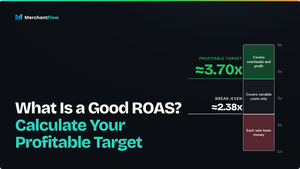
What Is a Good ROAS? Calculate Your Profitable Target
Is a 4x ROAS actually good? It depends on your margins. Learn how to calculate your break-even ROAS, compare advertising returns and set a profitable target for your ecommerce store.


Georgia Carapetis is Head of Marketing at MerchantFlow, helping ecommerce brands stop obsessing over ROAS and start focusing on profit. She writes about Google Shopping, contribution margins, and scaling without shrinking your margins.
Is a 4x ROAS actually good? It depends on your margins. Learn how to calculate your break-even ROAS, compare advertising returns and set a profitable target for your ecommerce store.
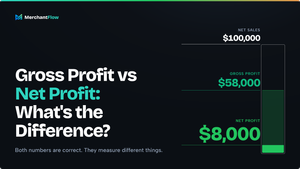
A store can make $58,000 in gross profit and only $8,000 in net profit from the same $100,000 in sales. Learn what each figure measures, how to calculate both margins and which one to use for pricing, ad spend and overall profitability.

Your store makes $80,000 in Black Friday sales. Google Ads is reporting a healthy return, Meta campaigns are converting, and orders are coming in faster than usual. It looks like a successful promotion. Then you account for the discounts, product costs, payment fees, shipping and extra advertising spend. Suddenly,
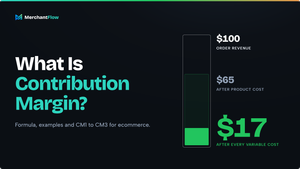
A $100 order can look excellent at first. The product costs $35, leaving what appears to be $65. Then the order has to be packed and shipped. The payment needs processing. Some customers will request refunds. If paid advertising brought the customer in, that has to be paid for too.
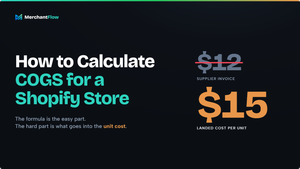
Your Shopify store can have its best sales month ever and still leave you wondering where the profit went. Revenue might be growing. Your ad accounts might show healthy ROAS. Orders might be up. But none of those numbers tells you what the products you sold actually cost. That is
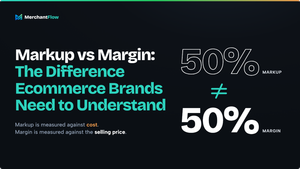
A product costs you $40. You want to make "50%" on it. If you mean a 50% markup, the selling price is $60. If you mean a 50% margin, the selling price is $80. Same product. Same percentage. A $20 difference in selling price. That is why confusing

For years, ecommerce merchants have tried to get shoppers onto their website. Meta Muse points towards a slightly different future. A shopper could tell an AI what they need, let it research the options, compare products and eventually complete much of the purchase process on their behalf. The customer may

Do Shopify stores still need apps in the age of AI? See what AI can replace, what still matters, and how MCP is changing ecommerce software.
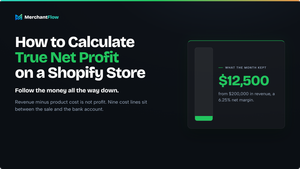
Your Shopify dashboard says you made $200,000 this month. Your products cost $72,000. So you made $128,000 profit, right? Not even close. That calculation gives you a rough view of gross profit, assuming your $72,000 product cost is accurate in the first place. It says nothing

Most ecommerce problems do not arrive with an obvious warning. Your Shopify dashboard rarely flashes red and tells you: "Your store became materially less profitable yesterday." Instead, the warning signs tend to appear across different systems. Meta spend creeps higher. Google Shopping ROAS softens. Conversion rate falls slightly.
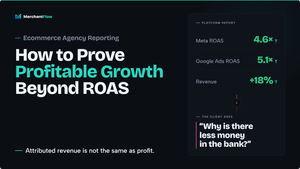
The monthly agency report says performance is strong. Meta reports a 4.6x return on ad spend. Google Ads reports 5.1x. Revenue is up 18 per cent and cost per purchase is down. Then the client asks the question that changes the meeting: “Why is there less money in
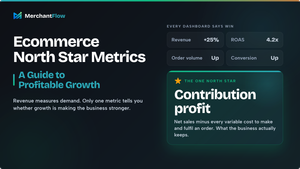
Your Shopify dashboard says revenue is up. Google Ads reports a strong return on ad spend. Meta claims another successful month. Order volume is growing, traffic is climbing and your marketing team is preparing to scale the campaigns that appear to be working. Then you look at the bank balance.
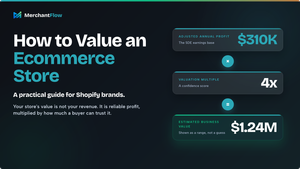
Most ecommerce founders know their revenue. Far fewer know what their store is actually worth. That gap matters because revenue is not the same as value. A Shopify store can show strong sales, Meta Ads can claim purchases, Google Shopping can keep spending, and the business can still be worth

Every ecommerce team has seen the same problem. Meta says it drove the sale. Google Ads says it drove the sale. GA4 shows something different again. Shopify records the order, but it does not always settle the argument. Then the founder checks the bank account and asks the only question

Learn how to negotiate better COGS, reduce landed costs and improve ecommerce margins with practical supplier negotiation steps.